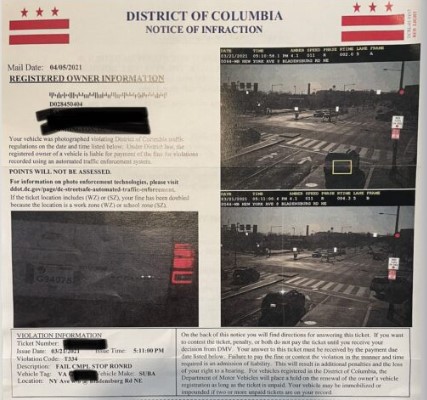
If you drive in Washington D.C., it finally happened. You opened your mail and found a “Notice of Infraction” from the D.C. Department of Motor Vehicles.
Maybe you were on I-295 where the speed limit drops unexpectedly. Maybe you were on Connecticut Avenue. Either way, you are now staring at a $100, $150, or even $500 fine.
Your first instinct is to ask: “Is this a scam?” or “Can I just ignore it?”
The answer is No. Ignoring it can lead to doubled fines and—thanks to strict reciprocity laws—the inability to renew your registration in Maryland or Virginia.
However, you can fight it. Here is the official 2026 guide to disputing a DC Automated Safety Camera (ASC) ticket.
The “Owner Liability” Trap (Read This First)
This is the most common mistake drivers make.
In many states (like California or Pennsylvania), you can get a ticket dismissed by simply proving you weren’t the driver. That defense does NOT work in D.C.
Under D.C. Code §50-2209.02, speed camera tickets are issued to the vehicle, not the driver. This means the registered owner is liable, regardless of who was driving. You cannot transfer the ticket to your spouse or friend unless you are a rental car company.
Valid Defenses That Actually Work
Since “It wasn’t me” is off the table, you need a stronger legal defense. The DC DMV Adjudication Services accepts the following arguments:
- Stolen Vehicle or Plates: This is the only “It wasn’t me” defense that works. You must provide a full police report filed before the date of the infraction.
- Emergency Circumstances:
- You were yielding to an emergency vehicle (e.g., moving out of the way of an ambulance).
- You were part of a certified funeral procession.
- You were directed to speed up by a police officer (requires proof).
- Technical Errors:
- “Ghost” Plate: The camera misread the license plate (e.g., read a “Q” as an “O”). If the photo clearly shows a different car model than yours, this is an easy win.
- Signage Issues: You can argue that speed limit signs were missing or obstructed by trees. This requires photo evidence from the specific date/location.
How to File Your Dispute (Adjudication)
You do not go to criminal court. You go to the DMV. You have 60 days to respond, but if you wait past 30 days, the fine doubles.
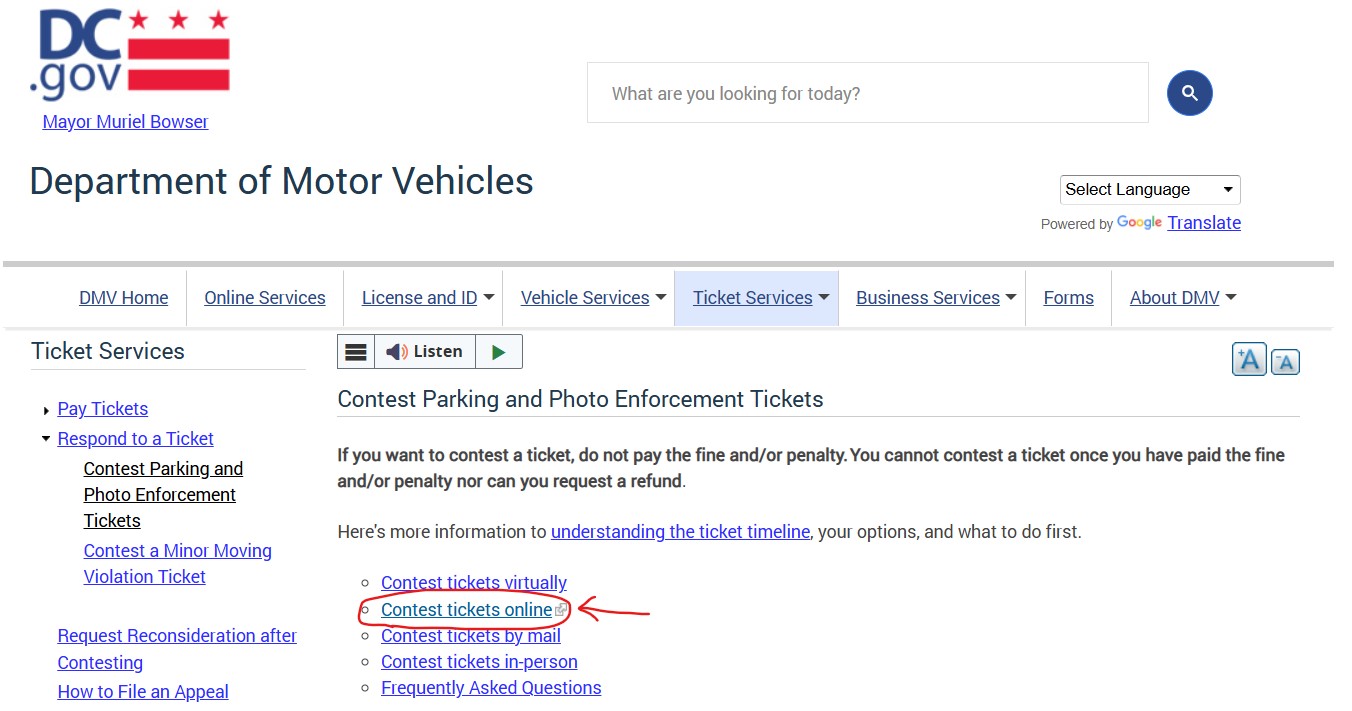
Option A: Online (Recommended)
- Visit the [DC DMV Adjudication Portal].
- Enter your ticket number.
- Select “Adjudicate” and upload your evidence (photos, police report) directly.
- Pro Tip: This pauses the clock on late fees while they review your case.
Option B: Mail Adjudication
- Check the “Deny” box on the back of your ticket.
- Mail your written statement and evidence to PO Box 37135, Washington, DC 20013.
Option C: Walk-In Hearing
- You can appear in person at the Adjudication Service Center (955 L’Enfant Plaza SW).
- Warning: Wait times can be long, and the hearing examiners are notoriously strict.
What Happens If I Just Pay It?
If you don’t have a valid defense, paying is often the safest route.
- Good News: DC camera tickets do not add points to your license.
- Good News: They are not reported to your insurance company.
- The Cost: Fines range from $100 (11-15 mph over) to $500 (26+ mph over).
Stop Funding the District
Fighting a ticket is stressful and the odds are stacked against you. The city relies on these cameras for revenue—over $1 billion collected since the program started.
The only way to truly win is to stop getting caught.
Ticketguard is the only app that fights back proactively. Unlike Waze, which relies on other users to “report” a camera, Ticketguard uses the official DC ASC database. We warn you before you hit the trap on I-295 or New York Ave.
Download the free app today and keep your $100.
Related D.C. Driver Guides
- The Map: [Washington D.C. Speed Camera Map: 2026 “ASC” Locations]
- Maryland Drivers: [Maryland Speed Camera Tickets: The New 2026 Fines & How to Dispute]